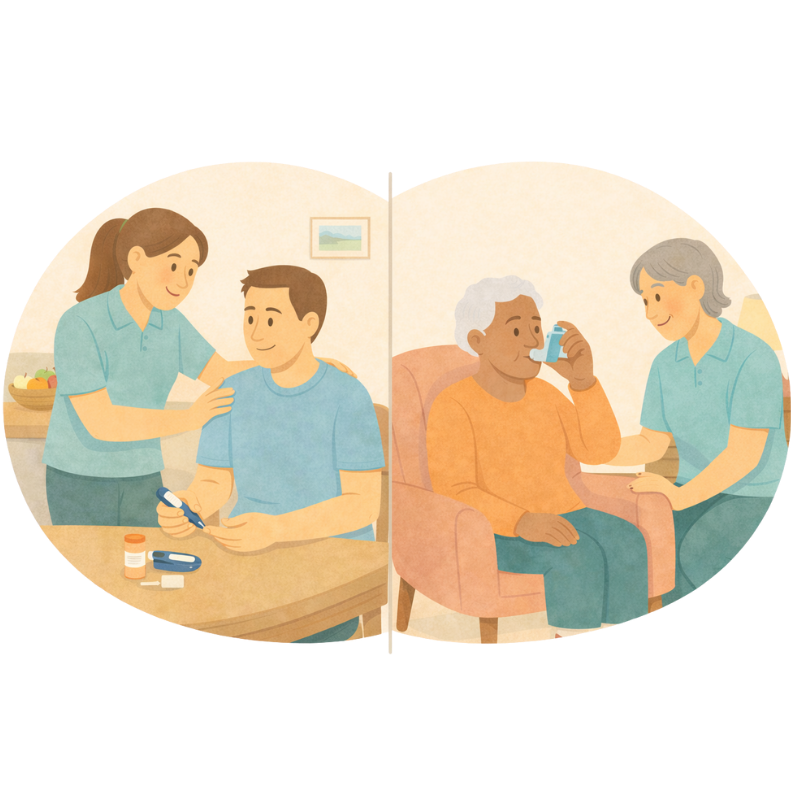
How Live-In Care Supports Independence for Young Adults
At its heart, live-in care is not about taking over someone’s life, it’s about enabling young adults to live life on their own terms, with the right level of support alongside them. Independence is not a fixed destination; it is a gradual, evolving journey, shaped by skills, confidence, and personal choice.
For young adults with varying care needs, from low support through to full assistance with personal care, mobility, transfers etc, live-in care works in partnership with Case Managers, Multi-Disciplinary Teams (MDTs), and other professionals, putting expert guidance into everyday practice. This approach ensures that support is safe, personalised, and empowering, helping young adults learn, grow, and maintain dignity while achieving their goals.



Speak to one of our experts
Our friendly experts are here to help from 9am to 7pm, 7 days a week.
What Independence Means in Live-In Care
Independence does not mean doing everything alone. For young adults receiving support, it means having choice, confidence, and control, with help available when needed.
Live-in care promotes independence by:
- Adapting support based on professional guidance and individual goals
- Encouraging participation rather than passive care
- Supporting gradual skill development at a realistic pace
- Adjusting support as confidence, ability, and care needs change
Because care takes place at home, skills are learned in real-life situations, making them more meaningful and easier to retain.
Skill Building Through Everyday Activities
Learning Through Shared Activities
A key principle of independence focused live-in care is teaching and guiding, not doing. Carers work alongside the young adult, translating professional advice from Case Managers and MDT teams into practical daily routines.
Examples include:
- Meal preparation: planning meals together, shopping collaboratively, cooking side by side, and gradually transferring responsibility.
- Household management: cleaning, laundry, and organising personal spaces, broken down into manageable steps.
- Transfers and mobility support: implementing safe techniques recommended by physiotherapists or occupational therapists, while encouraging the individual to participate as much as possible.
Travel and Community Engagement
Traveling and community access are important milestones for independence:
- Learning to use public transport, read timetables, and plan journeys
- Engaging in social activities, volunteering, education, or employment
- Enjoying exploring new places or visiting familiar leisure destinations
- Holidays are easier to plan with a live-in carer available for the duration of the trip
Carers apply professional guidance from occupational therapists, case managers, and MDT recommendations, ensuring independence develops safely and confidently.
Encouraging Choice and Control
Person-Led Decision Making
Independence is closely tied to having a voice in daily life. Live-in carers support young adults to make decisions about:
- Daily routines and schedules
- Social life and friendships
- Personal goals and ambitions
- How and when support is provided
Weekly plans are created with the individual, informed by guidance from Case Managers or MDT teams, ensuring autonomy while maintaining safety.
Respecting Preferences and Identity
Live-in carers respect personal routines, hobbies, and social preferences, creating a supportive environment where identity, self-esteem, and independence can flourish.
Building Confidence Through Gradual Support
Stepping Back as Skills Grow
Confidence develops when individuals are trusted to try, with carers providing reassurance without unnecessary intervention. Techniques include:
- Observing rather than directing
- Allowing learning through trial and error
- Offering encouragement instead of instructions
Practising Adult Responsibilities
Carers support young adults in:
- Making phone calls and booking appointments
- Communicating with professionals
- Managing everyday challenges
Celebrating achievements reinforces confidence and self-belief.
Support With Education and Employment
Education and Training
Live-in carers help implement professional guidance to:
- Organise coursework and deadlines
- Manage college or training timetables
- Develop study routines and time management skills
The aim is ownership of learning, with carers translating support strategies recommended by educational psychologists or learning support teams into practical routines.
Preparing for Employment
Support may include:
- Writing CVs and completing applications
- Preparing for interviews
- Exploring apprenticeships or work placements
Carers encourage self-advocacy, reflecting guidance from employment advisors or vocational specialists.
Live in carers can also arrange or provide transportation to places of education or work, this can be via accompaniment on a walk, using public transport or in some cases driving the clients car.
Health and Wellbeing Independence
Managing Health Confidently
Young adults are encouraged to take an active role in their health, following professional guidance from GPs, nurses, or MDTs:
- Using reminders for medication
- Understanding the purpose of medications
- Booking appointments independently
- Knowing when to ask for help
Developing Healthy Habits
Carers support:
- Establishing enjoyable exercise routines
- Planning nutritious meals
- Staying hydrated
- Maintaining personal care and hygiene
These habits strengthen both physical health and confidence.
Emotional Wellbeing and Resilience
Independence is also emotional and psychological. Carers provide consistent support to help young adults:
- Develop coping and problem-solving strategies
- Manage anxiety or stress around new experiences
- Feel secure while facing challenges
Having a trusted live-in presence reduces fear and promotes positive risk-taking.
Collaboration With Specialist Organisations
Live-in care complements professional guidance from:
- Case Managers and MDT teams for clinical and functional advice
- Charities and organisations like Headway UK, MS Society & Scope
- Healthcare and educational professionals providing personalised strategies
This ensures that support at home is evidence-based, safe, and tailored to the individual.
Why Live-In Care Works
Live-in care provides:
- One-to-one, personalised support
- Consistency that builds trust
- Learning in real-life environments
- Flexible, evolving support
- A balance between safety and autonomy
Live-in care allows learning to happen naturally, with repetition, reassurance, and reflection.
Supporting Families
Families gain confidence knowing that:
- Support is available while encouraging growth
- Communication is clear and collaborative
- Progress is gradual, visible, and measurable
- Peace of mind comes from professional oversight and personalised care
A Personal and Empowering Approach
Every journey towards independence is unique. Live-in care ensures that support remains respectful, flexible, and goal-focused, translating clinical guidance into everyday practice.
With the right live-in carer, young adults, whether they require minimal assistance or full support, can build the skills, confidence, and autonomy needed to thrive safely at home.
To find out more about our live in care services please call us on 0345 125 8975